Piano Sonata No.2 ("Sonata Notturna") Op.10 (1983) c. 15'00"
in one movement
Dedicated to Stephen Hough
First performed on July 7th, 1983 at the Wavendon Music Festival in England by Stephen Hough
ABOUT
Piano Sonata No.2 ("Sonata Notturna") was begun near the end of 1982 and completed in February of 1983. Part of the work was composed during a residency at the "Yaddo" Artists' Colony in Saratoga Springs, New York.
In contrast to my First Piano Sonata, written six years earlier, the Second Piano Sonata is outwardly unvirtuosic in nature; however, its interpretive and musical difficulties are considerable. It is in many ways a companion piece to my First Symphony, which was completed directly prior to the Sonata. Both works are concerned with the conflict between the tonal centers of B and C, and obsessive half-step figures which arise from this relationship. In the Second Sonata all of the ensuing material in fact unfolds from the half-step motive with which the work opens.
The Sonata Notturna is in one movement in what could be seen as a modified sonata form- having, however, two expositions, the second one an ornamented, elaborated version of the first, a sort of 'developmental exposition.' As a result of this, the actual development and recapitulation are rather short. The second theme of the work is a two-voice fugue derived from the first theme. In the second exposition an interesting 'aural illusion' occurs -what sounds like an inversion of the fugue is merely a repetition with octave displacement; the subject and countersubject being constructed so that the proper displacement of one becomes the inversion of the other.
The work's relentless austerity and sustained mood make any further explication of the subtitle unnecessary. It was written for and is dedicated to pianist Stephen Hough, who gave the work its world premiere at the Wavendon Festival in England in 1983.
RECORDINGS
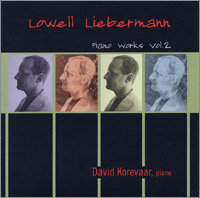
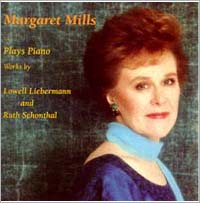

REVIEWS
“The Second Piano Sonata evokes a nocturnal landscape with spacious atmospheric textures creating a haunting mood, which is occasionally disrupted but works towards a radiant B major ending.”
Gramophone
“…most attractive in its expert use of pianistic colors and canny sense of working to a well-timed climax…”
New York Daily News
”Some pieces have genuine appeal, such as Lowell Liebermann’s graceful and dramatic Second Piano Sonata (1983).”
The Christian Science Monitor